Aer Lingus App
- 4.7
- Rating
- 1.00M
- Installs
- Free
- Price

 Analysis by App-foxy
When I book or manage an Aer Lingus flight, I want the practical jobs handled quickly: finding a route, checking the details, and keeping the trip information close at hand. The Aer Lingus app is built for exactly that travel routine. It is a free Travel & Local app from Aer Lingus, and its strongest quality is that it keeps the airline-specific part of a journey in one place rather than making me move between a browser, email, and several unrelated travel tools.
I found it most useful when I already knew I wanted to fly with Aer Lingus and needed a direct way to search, book, or manage that trip. It is less compelling as a general travel planner, because its focus is the airline rather than comparing every carrier or building a complete itinerary across different transport providers. That distinction matters: this is a focused companion for Aer Lingus passengers, not a universal booking marketplace.
How comfortably the app supports different travelers
I find that the app’s focused layout can help travelers with different needs approach an Aer Lingus journey in manageable steps, especially when they can prepare away from airport noise and time pressure. The useful question is not whether one interface suits everyone, but whether its flight-focused workflow fits the way you prefer to make decisions and get support. Next, I’ll look at the practical trade-offs that can shape that choice.
You May Also Like

 Blood Strike: 2.5 Anniversary
Blood Strike’s Loadouts Turn Every Drop Into a Tactical Gamble
A close look at Blood Strike’s custom loadouts: how fast access to signature weapons reshapes its battle royale rhythm, rewards preparation, and narrows the gap between fights.

 Pandora - Music & Podcasts
Pandora’s Music Is Easy to Start, but Harder to Recover
Pandora’s strength is its low-effort path from a seed to a station. Its weak spot is how much confidence it asks you to place in connection, setup, and quiet recovery.

 8 Ball Pool
 Is Built on Rivalries, Rematches, and Routine
A close look at the rivalries, rematches, shared routines, and unanswered safety questions that turn a quick pool match into a persistent mobile community.

 Samsung Music
’s Quiet Strength Is Playing What You Already Own
Its reach comes less from spectacle than from dependable access to a personal library. That simplicity is both the app’s strongest retention engine and its ceiling.

 AccuWeather: Weather Radar
AccuWeather Review: A Quick, Clear Forecast for Everyday Decisions
For everyday plans, the best forecast is the one you can understand quickly. AccuWeather makes rain timing, radar, and local conditions easy to act on, with a few trade-offs.

 Hill Climb Racing
Why Hill Climb Racing Still Turns Crashes Into One More Run
A tiny car, a bumpy hill and one more upgrade: Hill Climb Racing keeps resurfacing because its simple chaos makes every near-miss feel personal.
More From Our News Desk



Readable screens and a navigation style that suits short tasks
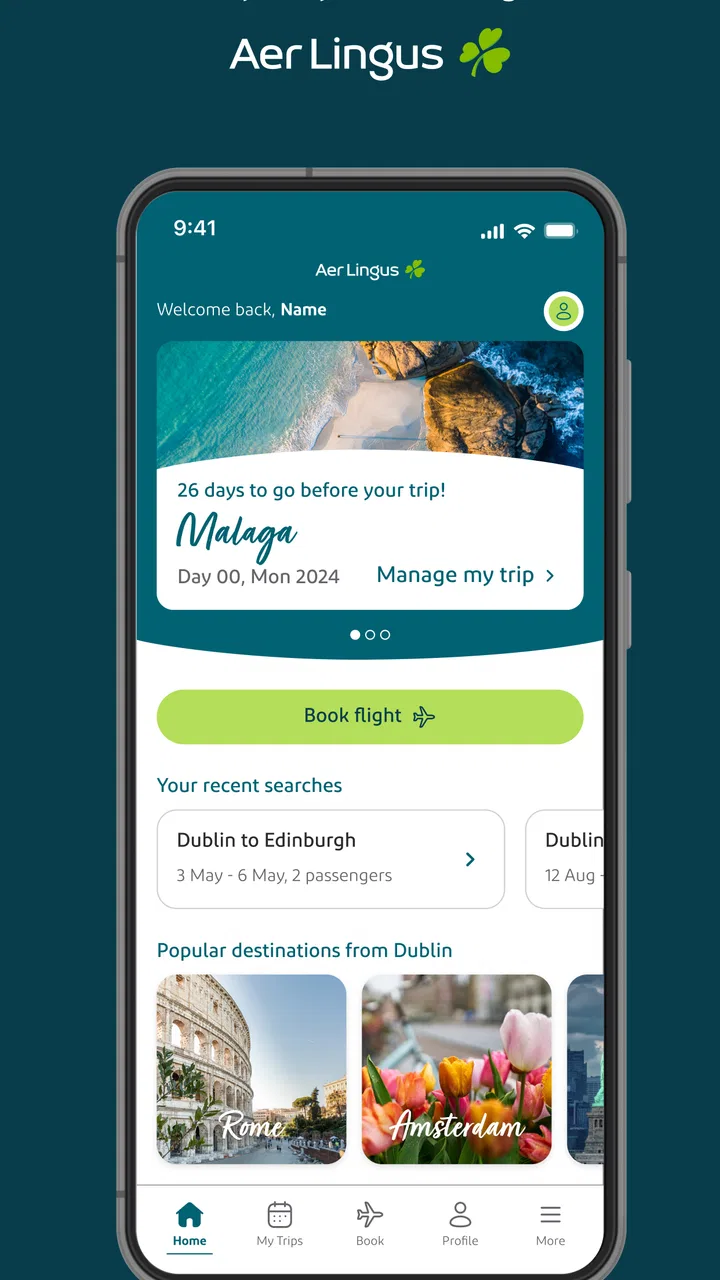
The app’s purpose is easy to understand from the start. Searching for a flight, making a booking, and looking after an existing journey are separate needs, and that separation gives the experience a sensible shape. I do not have to treat the app like a full travel diary when all I want is to deal with one flight. For a person who prefers clear, task-based navigation, that focus is a real advantage.
Readability is especially important in travel apps because people often use them while tired, rushed, or distracted. Flight dates, airports, passenger details, and booking information all need careful attention. I would still slow down before confirming anything, particularly when selecting dates or reviewing a route, but the app’s airline-specific structure makes the purpose of each step easier to follow than a broad travel search tool can sometimes manage.
There is also a useful difference between browsing and managing. A traveler who is only researching can begin with flight search, while someone who has already booked can go straight to the part of the app concerned with that journey. That reduces the mental effort of remembering where a particular task belongs. The best accessibility benefit here is task clarity rather than feature overload.
At the same time, airline apps can feel information-heavy because travel decisions contain many small details. A reader who needs larger text, stronger contrast, or a very uncluttered interface should judge the app on their own device and system settings rather than assume that a clean booking flow solves every visual need. The app is easier to approach when I use it deliberately, not while juggling bags, conversations, and a crowded airport environment.
Motor comfort, touch accuracy, and sensory load
Booking a flight is a poor moment for rushed tapping. The most important practical habit I developed is to complete the search and review stages when I have both hands free, then check every selected detail before moving on. That advice is not unique to airline software, but it is particularly relevant here because a small touch mistake can change a date, airport, or passenger entry.
For people with limited fine-motor control, the app may be more comfortable when used on a larger phone or tablet and with the operating system’s own touch and text adjustments enabled. Those settings can improve general interaction, but they cannot guarantee that every control will feel equally easy. Travelers who rely on switch access, voice control, screen magnification, or other assistive tools should test the complete booking path before depending on it during a time-sensitive trip.
Sensory context matters just as much. An airport is bright, noisy, and full of interruptions. A traveler with sensory sensitivities may prefer to search and review the booking at home, save the relevant information in a familiar place, and avoid making complex changes in a busy terminal. The app can be part of a calmer preparation routine, but it does not remove the stress created by the travel environment itself.
I also see value in using the app as a single reference point instead of repeatedly opening multiple travel services. Fewer app switches can mean fewer opportunities to lose focus. On the other hand, a traveler who needs constant spoken guidance or a very simplified interface should not assume that an airline app will match a dedicated accessibility tool. The right choice depends on how much assistance the person needs during each step.
Useful in ordinary travel situations
Imagine that I am leaving work, heading toward the airport, and suddenly need to check the details of my Aer Lingus journey. I can use the app to move from general flight information to the management side of the trip without searching through old messages first. That is where the app feels most natural: it supports a specific passenger who needs a direct airline channel at a moment when scattered information would be inconvenient.
Another realistic use is preparing before a family trip. I can search for the intended route, review the booking process carefully, and keep the airline’s app available for later management. For a parent or caregiver, the main benefit is not entertainment or discovery; it is having one familiar place to return to while organizing a journey. I would still keep an independent record of essential travel details, especially if another person in the group may need them.
The app is also a reasonable fit for travelers who prefer self-service. People who dislike calling an airline for every small task may appreciate being able to begin with the app. That said, self-service is not automatically easier for everyone. Someone who needs another person to interpret travel choices, check passenger information, or handle a complicated situation may find a human channel more reassuring.
For travelers who compare many airlines before booking, the usual flight-search websites and comparison apps remain better starting points. They are designed to put alternatives beside one another. Aer Lingus’s app becomes more useful after the decision has narrowed to this airline, because its value comes from handling an Aer Lingus journey rather than surveying the whole market.
What the app does well for inclusive use
The app’s free price removes one straightforward barrier to trying it, and its Everyone age rating makes it suitable as a general travel utility rather than an adult-only service. It has also reached a broad audience, with over a million installs and an average rating of 4.7 from around thirty-five thousand ratings. Those figures suggest that many people find the core experience dependable enough to keep using, although popularity alone cannot tell me whether it will suit a particular accessibility setup.
Its developer, Aer Lingus, is another practical advantage. When I use an airline’s own app, the purpose is immediately connected to the carrier I am traveling with. That can be less confusing than a third-party service that combines several airlines but presents each one through a different set of rules and screens. The trade-off is that the app is only relevant when Aer Lingus is part of the plan.
I would recommend it to an independent traveler who wants a focused way to search and manage Aer Lingus flights, to someone who prefers mobile self-service, and to a family organizer who wants an airline-specific tool available throughout preparation. I would be more cautious recommending it as the only travel resource for a person who needs extensive personal assistance, has difficulty with small touch targets, or cannot comfortably recover from an input error without help.
A useful workflow is to do the demanding work early: search and book in a quiet setting, review the route and passenger information before confirming, and open the app again later when there is no time pressure. That simple separation between planning and airport use makes the experience more accessible for people affected by noise, fatigue, limited dexterity, or attention difficulties.
Where friction can still appear
The app’s narrow focus is both its strength and its main limitation. It does not replace a complete travel organizer for rail connections, hotels, transfers, or flights with other airlines. If my journey includes several providers, I still need another method for keeping the whole plan together. A general travel app may be better for that wider picture, while the Aer Lingus app remains useful for the airline-specific portion.
There is also a difference between making a task available and making it effortless for every traveler. A person with low vision may need system-level adjustments. Someone with tremors or reduced dexterity may need extra time and a stable surface. A traveler with cognitive disabilities may benefit from a companion checking each stage. These are not failures unique to this app, but they are important reasons not to treat a mobile booking flow as universally simple.
Travel conditions introduce further pressure. Poor connectivity, a low battery, glare, background noise, and last-minute changes can all make a phone-based process harder. I would not rely on any single app as my only memory of a trip. Keeping key booking information accessible in another familiar form is sensible, particularly when traveling with someone who may need assistance or when the phone is shared.
Version 26.2.2 is the current version, and the app supports devices running Android 7.0 or later. That broad compatibility is helpful for people who keep an older phone, although an older operating system may not offer the same accessibility controls or performance as a newer device. I would update the phone where practical and test the app before travel rather than discovering a compatibility or interaction problem at the airport.
The app’s age also shows that it is an established product rather than a newly launched experiment: it was released on February 2, 2016. That history can be reassuring for travelers who prefer a mature airline companion, but it does not by itself prove that every screen works equally well with every assistive technology. Personal testing remains the most reliable check for a user with specific needs.
My recommendation for different kinds of passengers
If I were recommending it to a friend flying Aer Lingus, I would say: install it if you want a direct airline tool for searching, booking, and managing your flight, especially if you prefer handling travel details yourself. Use it during calm preparation, read each selection carefully, and keep a backup way to access important information. That approach gets the most from the app without asking it to become a complete travel system.
I would point a frequent comparison shopper toward a broader flight-search service first, then suggest returning to the Aer Lingus app once the airline choice is made. I would point a traveler who needs extensive human support toward assistance from a companion or the airline’s established support channels rather than expecting the app alone to solve every situation. For a passenger with visual, motor, hearing, or cognitive needs, I would encourage a short test run before the trip and the use of the phone’s accessibility settings where helpful.
My overall view is positive because the app understands its job. It is free, focused, and connected directly to Aer Lingus rather than trying to cover every part of travel. Its rating of 4.7 and broad installation base make it an easy app to consider, but the more important question is whether its focused self-service style matches the way you travel.
For Aer Lingus passengers who value a clear airline-specific workflow, this is a practical companion; for people seeking a fully inclusive, all-in-one travel planner, it is better used alongside other tools. I would recommend it, with the honest qualification that accessibility is also shaped by the phone, the traveler’s support needs, and the conditions in which the app is being used.
FAQs for Aer Lingus App
01What features does the Aer Lingus App offer?
The Aer Lingus App provides a range of features to enhance your travel experience. You can book flights, check-in online, and download mobile boarding passes. Additionally, the app offers real-time flight status updates, and you can manage your bookings directly from your device. It also includes exclusive offers and rewards for frequent flyers.
02Can I use the Aer Lingus App offline?
While some features of the Aer Lingus App require an internet connection, such as booking flights or receiving real-time updates, certain aspects can be accessed offline. For example, previously downloaded boarding passes remain available without a connection. However, for the most comprehensive experience, a stable internet connection is recommended.
03Is the Aer Lingus App secure for transactions?
Yes, the Aer Lingus App is designed with security in mind, utilizing encryption to protect your personal and payment information during transactions. Regular updates are provided to enhance security measures, ensuring that your data is kept safe while using the app for booking and managing flights.
04How user-friendly is the Aer Lingus App?
The Aer Lingus App is designed to be highly user-friendly, featuring an intuitive interface that simplifies navigation. Whether you're booking a flight or checking your flight status, the app provides clear instructions and a streamlined process. Frequent updates aim to improve the user experience based on customer feedback.
05What should I do if I encounter issues with the Aer Lingus App?
If you experience any issues with the Aer Lingus App, there are several support options available. First, ensure your app is updated to the latest version. You can also visit the help section within the app for troubleshooting tips. For further assistance, contact Aer Lingus customer support through the app or their official website.
Pros
- User-friendly interface for easy navigation.
- Real-time flight updates and notifications.
- Smooth booking and check-in process.
- Access to exclusive offers and discounts.
- Loyalty program integration for rewards.
Cons
- Occasional app crashes reported by users.
- Limited offline functionality available.
- Some features require stable internet.
- Customer support response can be slow.
- Certain updates may cause temporary bugs.

Aer Lingus App
Gallery